

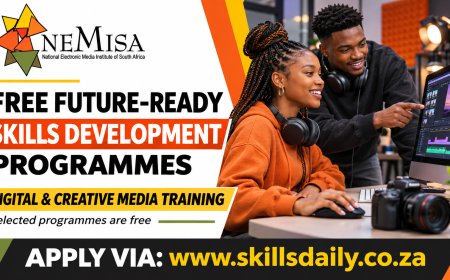






Free Future-Ready Skills Development Programmes at NEMISA: Explore Digital and Creative Media Training
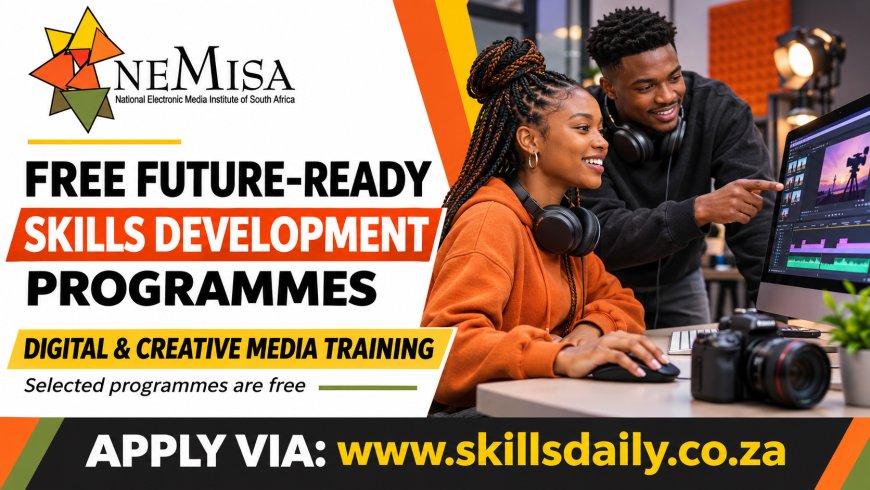
Free Future-Ready Skills Development Programmes at NEMISA: Explore Digital and Creative Media Training
South Africans who want to improve their digital knowledge, develop creative abilities or explore media careers can consider the learning opportunities available through the National Electronic Media Institute of South Africa (NEMISA). The institute focuses on developing digital and creative media skills that support participation in the digital economy.
NEMISA offers a range of free and funded learning opportunities. According to its website, most programmes are provided free of charge, particularly those aligned with the national digital skills strategy. Prospective learners should confirm the funding arrangements for their chosen programme, since this does not mean every course or external learning resource is free.
What Is NEMISA?
NEMISA is a South African public entity with a mandate to develop creative media and digital skills. Its programmes aim to improve learners’ readiness for opportunities involving media and digital technologies.
The institute identifies youth, women, people with disabilities, small businesses and government among its target groups, with rural and township communities receiving particular attention.
For someone considering further training, NEMISA provides several routes to explore: media study programmes, shorter creative courses and online digital learning platforms.
What Does Future-Ready Skills Development Mean?
Future-ready skills development involves building knowledge that helps people adapt as technology changes how we communicate, learn and work.
For example, an aspiring content creator might benefit from understanding visual storytelling and production. Someone seeking administrative work may want to strengthen their confidence with digital tools. A small business owner might explore skills that help them communicate with customers online.
These examples illustrate how digital learning can support different goals. Choosing a course works best when you connect it to a specific task you want to perform or a field you want to enter.
NEMISA’s Main Media Programme Areas
NEMISA’s study page lists five main programme areas: Radio Production, Television and Film Production, 2D and 3D Animation, Interactive Media and Graphic Design. These provide starting points for applicants interested in creative media training.
1. Radio Production
Radio production may appeal to people interested in audio storytelling, interviews, broadcasting and community communication.
When reviewing a radio course, consider which part of the production process interests you most. You might enjoy researching a topic, planning an interview, presenting information or editing recorded audio. Understanding your interests can help you assess whether the programme matches your goals.
2. Television and Film Production
Television and film production is an option to explore if you enjoy telling stories through moving images.
Before applying, think about whether you are drawn to planning stories, working behind a camera, coordinating production activities or editing footage. Read the programme description carefully to understand its balance of practical work and theory.
3. 2D and 3D Animation
Animation may suit learners interested in illustration, characters, movement and visual storytelling.
Applicants should review the course requirements and any creative assessment instructions. If a portfolio is requested, follow the specific brief rather than assuming that any collection of drawings will meet the application requirements.
4. Interactive Media
Interactive media is a field to consider if you are curious about how people engage with digital content and experiences.
When comparing programmes, look for clear information about the tools used, the projects learners complete and the knowledge expected at entry. This will help you judge whether the training suits your current skill level.
5. Graphic Design
Graphic design may interest people who enjoy arranging images, colours and text to communicate a message.
If this is your preferred field, consider the kinds of work you want to create, such as posters, digital graphics or branding materials. Use the course information to assess how closely the training fits those interests.
Short Courses and Creative Skills Training
NEMISA also lists shorter learning areas that include:
- Podcasting.
- Storytelling using mobile devices.
- Live streaming.
- Digital photography.
- Newsroom skills.
- Future-proofing community media workshops.
These are published course areas; applicants should check the relevant notices to establish which are currently available and how to participate.
Shorter training can be useful when you have a focused learning goal. For instance, someone who already creates written content might want to explore audio or video storytelling. A community organisation might want its members to become more confident in producing digital content.
Online Digital Skills Learning
NEMISA’s official website links to a Digital Skills Platform and Microsoft Community Training platform. These links provide routes for exploring online learning alongside its media study programmes.
The institute says many of its short and foundational courses are accessible online. It also describes learning approaches that include self-paced study, in-person training, remote learning and blended delivery. The format depends on the programme.
Before choosing an online course, check:
- Whether the course suits beginners or requires previous knowledge.
- Whether you need a computer or can complete activities on a mobile device.
- How much study time is expected.
- Whether there are assessments or practical tasks.
- What completion evidence or certificate is offered.
- Whether any fees apply.
These checks will help you choose training you can realistically complete.
Examples of Digital Skills Courses
A separate NSG–NEMISA Digital Skills Courses catalogue lists AI Fluency, Introduction to Cyber Security and Mobile Digital Literacy. study.mynsg.thensg.gov.za
Its Mobile Digital Literacy course description covers responsible online communication, creating and sharing content, internet tools, privacy, identity management and an introduction to emerging technologies. The listing describes an online, part-time course lasting one month. Applicants should review the current intake details and eligibility conditions before applying.
Who Should Explore These Opportunities?
NEMISA’s target groups include young people, women, people with disabilities and underserved communities. However, each programme may have its own admission conditions.
Depending on the course requirements, the training may be relevant to:
- School leavers exploring further learning.
- Jobseekers looking to strengthen their skills.
- Graduates seeking additional practical knowledge.
- Aspiring content creators and media practitioners.
- Entrepreneurs interested in digital communication.
- Community organisations developing media capacity.
This is a guide to possible interests, rather than a statement that every person in these groups automatically qualifies.
Are NEMISA Programmes Accredited?
NEMISA’s study page states that its full certificate qualifications are accredited through MICT SETA.
Applicants should distinguish between a full qualification, a short course and a certificate of completion. Before enrolling, ask what you will receive after completing the programme and whether it carries credits or formal accreditation.
This is particularly useful if you intend to use the training to meet the requirements of a job application or further qualification.
How to Choose the Right Programme
Start by identifying what you want to achieve. A clear goal makes it easier to compare the available options.
| Your learning goal | Programme area to explore |
|---|---|
| Develop an interest in audio storytelling | Radio production or podcasting |
| Explore visual storytelling | Television and film production |
| Build an interest in illustration and moving images | Animation |
| Explore visual communication | Graphic design |
| Understand digital content experiences | Interactive media |
| Improve confidence using online tools | Foundational digital skills courses |
These are suggested starting points. Check each course description before deciding whether it meets your needs.
You should also consider your available time, access to equipment and ability to attend any required sessions. A suitable course should fit both your learning goal and your circumstances.
How to Apply for Media Programmes
NEMISA’s application page provides registration links for its School of AGDI Media and School of Broadcasting.
To explore an application:
- Visit the official NEMISA website.
- Open Study With Us and read about the available programme areas.
- Visit the Application Forms page.
- Choose the relevant registration link.
- Read the form’s requirements, intake information and instructions.
- Complete the application and submit the requested supporting material.
Do not assume that a listed programme is accepting applications for every intake. Check the dates and instructions attached to the relevant form.
How to Explore Online Learning
For digital courses, follow the Digital Skills Platform or Microsoft Community Training links in the official website’s study navigation.
Review the course catalogue and any registration instructions. If you are new to online study, begin with a manageable course and set aside regular time for learning and practice.
Keep a record of any completed assessments, certificates and practical projects. These can help you explain what you learned when updating your CV or discussing your skills.
Questions to Ask Before Enrolling
Before committing to a programme, confirm the following:
- Is the course currently accepting learners?
- What are the entry requirements?
- Is tuition fully funded?
- Are there equipment, connectivity or attendance costs?
- How long does the programme run?
- Is learning online, in person or blended?
- What assessments are required?
- What qualification or certificate is awarded?
A free tuition offer does not, by itself, confirm that transport, accommodation, meals, data or a stipend are included. Ask about these arrangements for the specific programme.
Contact NEMISA
For programme information and application assistance, contact NEMISA directly:
Telephone: 011 484 0583
Email: info@nemisa.co.za
Address: 26 Canary Road, Auckland Park, Johannesburg.
For technical assistance with the NEMISA courses described in the NSG–NEMISA listing, the published support address is elearningsupport@nemisa.co.za. study.mynsg.thensg.gov.za
Explore the programmes at www.nemisa.co.za and confirm the current intake, funding and admission requirements for your chosen course.
What's Your Reaction?
 Like
0
 Dislike
0
 Love
0
 Funny
0
 Angry
0
 Sad
0
 Wow
0