























South West Gauteng TVET College Work Integrated Learning Programmes: Gain Practical Workplace Experience
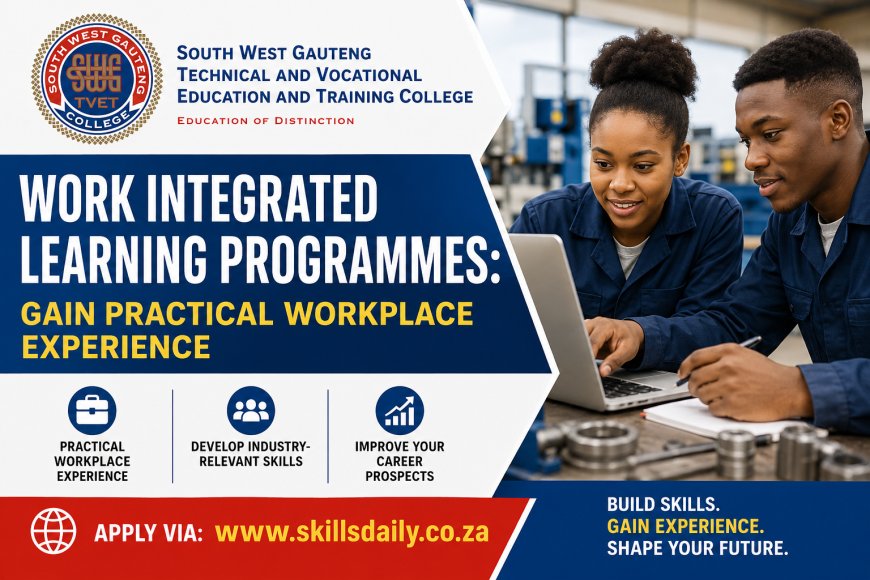
South West Gauteng TVET College Work Integrated Learning Programmes: Gain Practical Workplace Experience
For students who want to move from classroom-based learning into the workplace, South West Gauteng TVET College (SWGC) offers opportunities designed to help learners gain practical experience and improve their readiness for employment.
The college’s Work Integrated Learning (WIL) and workplace placement initiatives connect students and graduates with industry and public-sector organisations, giving participants an opportunity to apply the knowledge and skills they gained through their studies in real working environments.
What is Work Integrated Learning at SWGC?
Work Integrated Learning is intended to bridge the gap between theoretical education and practical workplace experience.
According to SWGC, its placement activities include Work Integrated Learning for post-NCV Level 4 and N6 learners who have completed their studies in Business Studies, Utilities Studies and Engineering Studies. The college also facilitates workplace-based exposure for learners who are still completing their programmes.
This approach allows students to develop practical workplace skills while gaining exposure to the expectations, procedures and responsibilities associated with their chosen careers.
Who Can Benefit From the Programme?
SWGC's WIL opportunities are particularly relevant to learners who have reached the exit level of their studies and need workplace experience.
The college identifies opportunities for:
- Post-NCV Level 4 learners
- N6 learners who have completed their academic studies
- Students in Business Studies
- Students in Engineering Studies
- Students in Utilities Studies
- Graduates requiring workplace experience for further qualification requirements
- Learners participating in occupational programmes that include workplace learning
SWGC also states that its occupational programmes include formal work-integrated learning components, with work-based learning forming an important part of occupational qualifications.
NATED Students and Workplace Experience
For students enrolled in Report 191/NATED programmes, workplace experience can be particularly important.
SWGC explains that N4-N6 programmes are offered across Engineering, Business and Utility Studies, and students completing these programmes must complete the required 2,000 working hours in the relevant field of study to complete the qualification.
This makes workplace placement an important step for eligible students working towards completing their qualifications.
Practical Experience Across Different Fields
The college's placement activities cover several areas of study. Depending on available funding and partnerships, learners can be placed with organisations where they can gain experience related to their field.
SWGC's New Business Development Unit focuses on developing relationships with employers, government departments, training providers and other organisations to create placement opportunities. The college's latest annual reporting also identifies work-based exposure and Work Integrated Learning placement as part of its activities aimed at improving the responsiveness of TVET education to the world of work.
Previous SWGC programmes have included placements supported by different SETAs and other partners, demonstrating how funding partnerships can create workplace opportunities for qualifying students.
Partnerships With Employers
One of the major components of SWGC's WIL strategy is its collaboration with industry and public-sector organisations.
The college has entered into partnerships intended to create workplace opportunities for students. For example, SWGC reported that its partnership with the Department of Justice and Constitutional Development resulted in students being placed at various departmental facilities, including students with special needs, while lecturers were also placed for workplace exposure.
The college has also worked with organisations in different sectors to expand opportunities for learners and graduates.
These partnerships can help students gain exposure to real workplace environments while allowing employers to contribute to skills development.
Work-Based Exposure vs Work Integrated Learning
It is important to distinguish between some of the different opportunities offered through SWGC.
Work-Based Exposure (WBE) is aimed at giving learners workplace exposure while they are still completing their studies. SWGC describes this as opportunities where on-course learners can spend periods of time in the workplace, including during college holidays.
Work Integrated Learning (WIL) is aimed particularly at post-NCV Level 4 and N6 learners who have completed their academic component and require workplace experience.
The college also facilitates internships, learnerships, apprenticeships and other skills-development opportunities through its partnerships and New Business Development activities.
How to Apply for SWGC WIL Opportunities
Students interested in WIL opportunities should regularly check the official SWGC website and announcements because placements can depend on available funding, employer partnerships, programme requirements and application periods.
SWGC has previously instructed eligible students seeking placement to submit documents to its Work-Based Exposure offices. Documents requested in a previous placement opportunity included:
- Comprehensive CV
- Certified copy of ID
- Certified copy of Matric certificate
- Certified copies of N4-N6 certificates/results where applicable
- College testimonial
The college has previously allocated WBE offices according to study area, including Engineering, Business Studies and Utility Studies.
Important: Requirements, available placements, stipends and closing dates can change from one opportunity to another. Applicants should therefore verify the latest requirements directly with SWGC before submitting documents.
Why WIL Is Important for Students
Completing your academic studies is an important achievement, but employers often look for candidates who can demonstrate that they understand how to operate in a professional environment.
WIL can help students develop:
- Practical workplace experience
- Industry-specific skills
- Professional communication
- Teamwork and collaboration
- Time management
- Workplace discipline
- Problem-solving abilities
- Confidence in professional environments
- A better understanding of employer expectations
SWGC has described WIL as an important mechanism for improving teaching and learning while aligning theoretical education with the skills requirements of industry.
Keep Your Documents Ready
Students looking for WIL opportunities should prepare their documents before an opportunity is advertised. Having an updated CV, identification documents, academic records and other supporting documentation ready can make the application process easier.
Applicants should also make sure that their contact details are correct and up to date, particularly when submitting documents through the college's placement offices.
Where to Find More Information
Prospective and current students can visit the official South West Gauteng TVET College website for information about programmes, admissions and study opportunities.
South West Gauteng TVET College's Work Integrated Learning initiatives provide an important pathway between education and employment. By combining classroom knowledge with workplace exposure, eligible learners can develop practical skills and gain valuable experience in their chosen fields.
For students who have completed their NC(V) Level 4 or N6 studies, WIL can be an especially important step towards completing workplace requirements, strengthening a CV and becoming better prepared for the South African job market.
Applicants should always confirm the latest WIL vacancies, eligibility criteria, placement dates, stipend information and application procedures with SWGC before applying.
What's Your Reaction?
 Like
0
 Dislike
0
 Love
1
 Funny
0
 Angry
0
 Sad
0
 Wow
0