

















Ingwe TVET College Work Integrated Learning Programmes: Develop Practical Skills
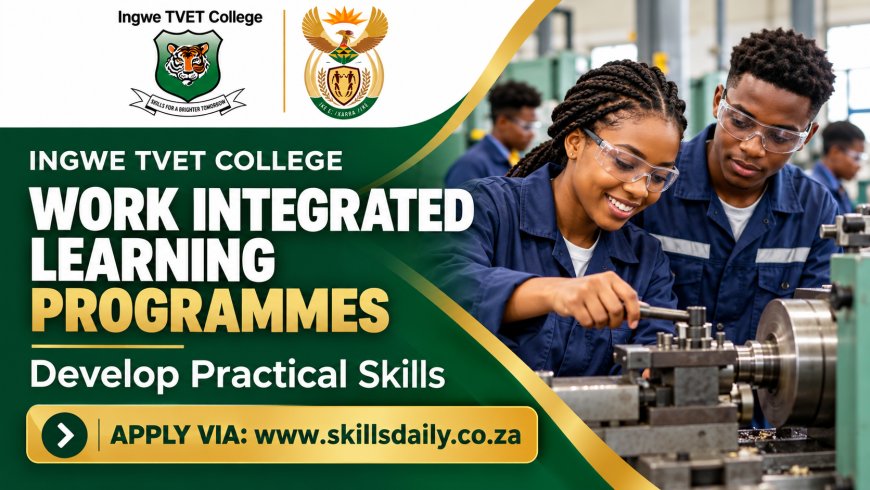
Ingwe TVET College Work Integrated Learning Programmes
Work Integrated Learning (WIL) is an important part of preparing TVET students for the workplace because it allows learners to gain practical experience while applying the knowledge and skills they have developed through their studies. Ingwe TVET College provides technical and vocational education and training programmes designed to respond to the needs of the economy and prepare students for further study, employment and entrepreneurship.
Students interested in vocational and occupational training can explore the programmes offered by Ingwe TVET College and find out whether their chosen programme includes workplace-based learning or other practical training opportunities.
What Is Work Integrated Learning?
Work Integrated Learning is an approach that combines classroom-based education with practical workplace experience. It gives students an opportunity to apply what they have learned in a real or simulated work environment.
Depending on the qualification and programme, workplace exposure can help students:
- Develop practical workplace skills
- Gain experience related to their field of study
- Understand workplace procedures and expectations
- Improve communication and teamwork skills
- Build confidence in performing occupational tasks
- Become more prepared for employment
- Develop industry-relevant experience
For TVET students, this practical component can be particularly valuable because many technical and occupational careers require both theoretical knowledge and hands-on competence.
Ingwe TVET College Programmes
Ingwe TVET College states that it offers a range of accredited technical and vocational education programmes. Its programme categories include National Certificate (Vocational) programmes, Occupational Programmes and Articulation Qualifications.
1. NCV Programmes
National Certificate (Vocational) programmes are offered from NQF Level 2 to NQF Level 4. These programmes are designed to provide students with vocational knowledge and practical skills relevant to different occupational fields.
Students considering an NCV qualification should check the specific programme information and requirements to determine what practical training or workplace exposure is included.
2. Occupational Programmes
Ingwe TVET College also offers occupational programmes, including skills programmes and learnerships aimed at specific occupations. The college's Learnerships section is responsible for occupational programmes, skills programmes and learnership programmes.
Occupational training can be particularly useful for students who want to develop practical skills for a specific career or occupation.
3. Articulation Qualifications
The college also lists articulation qualifications, which provide pathways for progression to higher education and opportunities for recognition of prior learning.
Workplace Experience and Industry Partnerships
A key feature of effective work-integrated learning is the connection between the college, students and employers.
Ingwe TVET College documentation relating to training partnerships indicates that service providers involved in learning interventions may be required to build partnerships with relevant employers and ensure that learners receive appropriate workplace experience.
This type of partnership can help bridge the gap between education and employment by exposing learners to real workplace environments and occupational expectations.
Students should therefore check the specific requirements of their programme to establish whether workplace learning is compulsory, where it takes place and how it forms part of the qualification.
Skills Development Opportunities at Ingwe TVET College
Ingwe TVET College has also participated in skills-development initiatives in partnership with organisations such as the Wholesale and Retail SETA. For example, a previous college skills programme advertised opportunities in areas including data science, robotics, coding, Internet of Things (IoT), cellphone repairs and artificial intelligence.
These initiatives demonstrate the college's involvement in skills development beyond conventional classroom-based education.
However, applicants should always check the latest official college announcements because programme availability, funding arrangements and application dates can change.
Ingwe TVET College Campuses
Ingwe TVET College operates several campuses in the Eastern Cape, including:
- Mount Frere Campus – KwaBhaca
- Maluti Campus – Maluti
- Mt Fletcher Campus – Mt Fletcher
- Ngqungqushe Campus – Lusikisiki
- Siteto Campus – Bizana
The college's administration centre is located in Badibanie Village, KwaBhaca.
Students should confirm which campus offers their preferred programme before applying.
Who Can Apply?
Admission requirements depend on the particular qualification or programme. Prospective students should therefore consult the official programme information before submitting an application.
For first-time applicants, Ingwe TVET College's application information states that applicants need to provide documents including:
- South African ID or passport
- Latest academic results
- Proof of residence
Applicants who want to apply for NSFAS funding are also required to provide proof of income and parents' or legal guardians' IDs.
The college also requires first-time applicants to complete a Pre-Entry Placement Test before completing the online application.
How to Apply to Ingwe TVET College
Prospective students can apply through the college's online application system. Ingwe TVET College also states that applicants who require assistance can visit a campus to book an online application session with college staff.
The college's online student system provides prospective students with options to apply, register and access other student-related information.
Applicants should follow the latest instructions published by the college rather than relying on old application dates or programme advertisements.
Why Choose a Work-Integrated Learning Programme?
Choosing a programme that provides meaningful workplace exposure can offer several advantages.
Practical experience: Students can practise occupational skills instead of relying only on theoretical learning.
Workplace readiness: Exposure to a professional environment can help learners understand workplace standards, responsibilities and expectations.
Career development: Practical experience can make it easier for students to identify the types of jobs or industries that match their skills and interests.
Skills development: WIL can strengthen technical, communication, problem-solving and teamwork skills.
Industry exposure: Students may gain valuable insight into how their chosen occupation operates in the real world.
Important Information for Prospective Students
Not every programme necessarily has the same workplace-learning structure. Students should confirm the details of their chosen programme directly with Ingwe TVET College, including:
- Whether WIL is included
- The duration of workplace training
- Workplace placement requirements
- Entry requirements
- Available campuses
- Application dates
- Funding options
- Required documents
- Whether students must find their own placement
This is especially important because programme offerings and admission information can change from one academic year to another.
How to Get More Information
For the latest information about programmes, admissions, occupational training and work-integrated learning opportunities, prospective students should visit the official Ingwe TVET College website.
The college lists its main contact number as 039 940 2142 and its general email address as info@ingwecollege.edu.za.
Ingwe TVET College provides vocational and occupational education aimed at developing skills that are relevant to the economy. Its programme offering includes NCV qualifications, occupational programmes, skills programmes and learnerships.
For students looking for a practical route into employment, programmes that incorporate workplace learning can provide an important opportunity to develop occupational skills and gain exposure to the world of work. Prospective students should check the latest official Ingwe TVET College information to identify programmes currently available and establish the specific WIL requirements for their chosen field.
What's Your Reaction?
 Like
0
 Dislike
0
 Love
1
 Funny
0
 Angry
0
 Sad
0
 Wow
0