










Dynamic DNA Skills Development, Learnerships and Courses: Opportunities for South African Youth
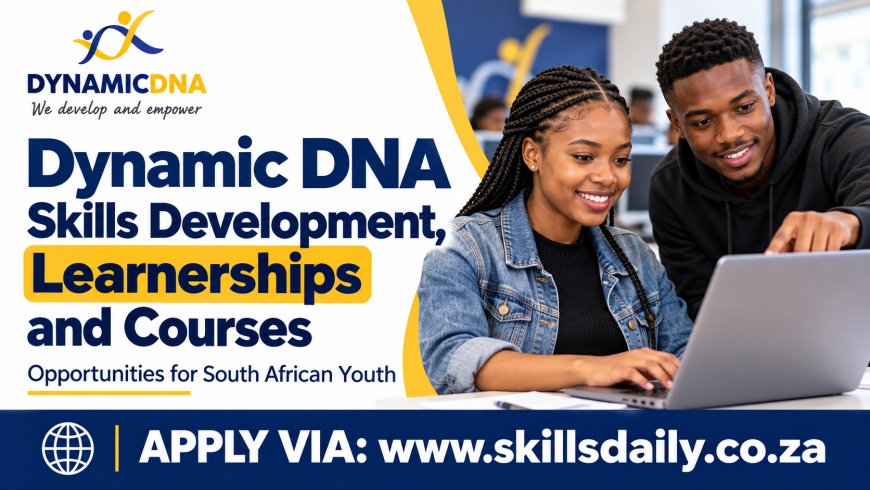
Dynamic DNA Skills Development, Learnerships and Courses: Opportunities for South African Youth
South African young people who want to build careers in information technology (IT), business management, software development and other digital fields can explore the training opportunities offered by Dynamic DNA.
Dynamic DNA is a skills development and training academy that focuses on developing information and communications technology (ICT) professionals and business talent. The organisation offers learnerships, short courses, technical training and other skills development solutions designed to help learners gain industry-relevant knowledge and practical experience.
For young people who want to improve their employability, gain recognised qualifications or prepare for careers in the digital economy, Dynamic DNA is worth exploring.
Prospective learners should check the official website for current course availability, learnership openings, admission requirements and application deadlines.
1. About Dynamic DNA
Dynamic DNA is a South African training provider specialising in IT, business skills and professional development. The organisation aims to address the shortage of skilled technology professionals by combining theoretical education with practical learning.
Its training approach supports learners who want to enter the technology industry, as well as employees and organisations that need to improve their digital and business capabilities.
Dynamic DNA identifies with the Fourth Industrial Revolution (4IR), with a focus on preparing people for technology-driven careers and helping businesses respond to changing digital skills requirements.
The organisation describes itself as accredited with the Media, Information and Communication Technologies Sector Education and Training Authority (MICT SETA). It also offers business-related learnerships and corporate training services.
2. Dynamic DNA IT Learnerships
IT learnerships are among the training opportunities offered by Dynamic DNA. These programmes are designed to help learners develop computer, technology and digital workplace skills through structured learning.
A learnership generally combines theoretical instruction with practical workplace experience and leads to a qualification or occupational learning outcome, depending on the programme.
Dynamic DNA's published learnership offerings include the following:
Information Technology: End User Computing – NQF Level 3
This programme focuses on foundational computer skills and the use of software applications in a business environment.
Learners can develop knowledge and skills related to:
-
Using computer systems and common software applications.
-
Working with digital information.
-
Applying technology in everyday workplace tasks.
-
Improving productivity through computer-based tools.
-
Developing basic digital workplace competence.
This programme may suit people who want to strengthen their computer skills before progressing to more specialised IT training.
For programme details, visit the official IT and Business Learnerships page.
3. Dynamic DNA Business Learnerships
In addition to IT training, Dynamic DNA offers business learnerships that focus on management, administration, entrepreneurship and project coordination.
These programmes can help learners develop transferable skills that are useful in different industries.
The business learnerships listed on the provider's website include the following.

New Venture Creation – NQF Level 4
This programme focuses on the fundamentals of starting and managing a business. Topics include business planning, market analysis and financial management.
It may interest aspiring entrepreneurs who want to develop the skills needed to establish a business.

Project Management – NQF Level 4
Learners develop foundational knowledge of project planning, implementation, resource management and risk assessment.
These skills can be useful in administrative, operational and project support roles.

Generic Management – NQF Level 4
This programme covers foundational management skills, including leadership, decision-making and team coordination.
It may benefit people preparing for supervisory or management-related responsibilities.

Business Administration Services – NQF Level 4
This programme focuses on office administration, communication, record-keeping and the efficient running of business operations.

Marketing Management – NQF Level 5
Learners explore marketing strategy, market research, branding and customer engagement.

Business Analysis – NQF Level 6
This programme focuses on communication, strategic problem-solving, requirements documentation and business modelling.
Important: These are programmes listed on Dynamic DNA's learnership information page. Their current availability, entry requirements and registration status must be confirmed directly with the provider.
4. Dynamic DNA IT Courses and Short Skills Programmes

Dynamic DNA also provides IT courses and short skills training for people who want to improve their technical abilities or expand their professional knowledge.
Depending on the course, learners may be able to study online or attend in-person training.
Training areas highlighted by Dynamic DNA include:
-
Information technology and computer applications.
-
Software testing.
-
Business analysis.
-
Cybersecurity.
-
Cloud technologies.
-
Data science and artificial intelligence.
-
Project management.
-
Professional and soft skills.
The provider also offers vendor-specific and internationally certified training options. The qualifications and certifications available depend on the selected course.
To explore available options, visit the Dynamic DNA website.
5. Software Testing Training
Software testing is an important part of software development because it helps identify errors and verify whether applications work as intended.
Dynamic DNA lists software testing training among its technical learning opportunities.
Training in this field can introduce learners to areas such as:
-
Software testing principles.
-
The software development life cycle.
-
Test planning and execution.
-
Identifying and documenting software defects.
-
Quality assurance processes.
The organisation has also advertised Software Testing NQF Level 5 training on its learnership information page. Applicants should confirm the current course structure, entry requirements and availability before applying.
6. Business Analysis Training
Business analysis is another career-focused area associated with Dynamic DNA's training offering.
Business analysts help organisations understand their needs, evaluate processes and identify suitable solutions to business problems.
Training in this field may cover:
-
Requirements gathering and documentation.
-
Business process analysis.
-
Stakeholder communication.
-
Problem-solving and critical thinking.
-
Business modelling.
-
Supporting technology and organisational change.
Dynamic DNA lists Business Analysis NQF Level 6 among its business learnership offerings. This may be relevant to people interested in combining business knowledge with technology skills.
7. Dynamic DNA 4IR4HER Programme
Dynamic DNA also runs the 4IR4HER initiative, which focuses on improving women's access to technology careers.
The programme aims to address gender inequality in the ICT sector by supporting women who want to develop advanced digital skills and pursue opportunities in technology.
The training areas highlighted on the programme page include cloud technologies and machine learning, with references to platforms such as Microsoft Azure, Google Cloud and AWS.
The initiative also encourages workplace participation and partnerships that can help female learners apply their theoretical knowledge in professional environments.
Women interested in these opportunities can visit the official 4IR4HER programme page to learn more about its objectives and enquire about current opportunities.
8. Who Can Apply for Dynamic DNA Programmes?
Eligibility depends on the specific course, learnership or training initiative.
Potential applicants may include:
-
Young South Africans interested in starting careers in IT.
-
Unemployed individuals seeking to improve their employability.
-
Matriculants who want to develop computer and digital skills.
-
People interested in business management or administration.
-
Individuals seeking specialised technology training.
-
Women interested in advancing their careers in ICT.
-
Employed individuals who want to improve their professional skills.
Some programmes may require a particular school qualification, previous training, technical knowledge or other criteria. Higher-level courses may have additional academic requirements.
Applicants should therefore check the requirements of their chosen programme rather than assume that all courses accept the same qualifications.
9. How to Apply for Dynamic DNA Learnerships
If you are interested in applying for a Dynamic DNA learnership, follow these steps.
Step 1: Visit the official website
Open www.dynamicdna.co.za and explore the learnership and training sections.
Step 2: Choose a programme
Decide whether you are interested in IT, business learnerships, short courses or specialised technology training.
Step 3: Check application requirements
Read the entry criteria, required documents and application instructions for your chosen programme.
Step 4: Prepare your documents
Depending on the application requirements, you may need your CV, certified Matric certificate, contact details and proof of other qualifications.
Step 5: Submit your application
Follow the official instructions and ensure that all required fields and documents are completed correctly.
Are Dynamic DNA learnership applications currently open?
The Dynamic DNA learnership application page currently displays an “Applications Temporarily Closed” notice. The page explains that submitted applications may be reviewed and kept on file for consideration when suitable learnership opportunities arise.
You can check the application page here: Dynamic DNA Learnership Application Page
Because application status can change, check the page again or contact the organisation to enquire about upcoming intakes.
10. Documents to Prepare Before Applying
When an application opens, preparing your documents in advance can make the process easier.
Depending on the programme, you may be asked for:
-
A recently certified Matric certificate.
-
An updated CV.
-
Proof of your highest qualification.
-
Valid contact details and residential information.
-
A disability certificate, if applicable and requested.
-
Other supporting documents specified in the advertisement.
The Dynamic DNA learnership application page specifically requests a certified Matric certificate and CV, with a disability certificate where applicable. Follow the latest instructions on the application form.
11. Does Dynamic DNA Pay Learnership Stipends?
A stipend should not be assumed for every Dynamic DNA course or learnership.
Whether a learner receives a stipend depends on the specific opportunity and its funding or employment arrangements. Similarly, course fees, bursary support and workplace placement arrangements may differ between programmes.
Before accepting an opportunity, confirm:
-
Whether the programme is funded or fee-paying.
-
Whether a monthly stipend is offered.
-
The duration of the training.
-
Whether workplace experience is included.
-
The qualification or certificate awarded.
-
Whether there is a possibility of employment after completion.
Only rely on stipend amounts and funding details published in an official advertisement or confirmed by Dynamic DNA.
12. Dynamic DNA Contact Details
For enquiries about available learnerships, IT courses, business training and application status, contact Dynamic DNA directly.
Website www.dynamicdna.co.za
Telephone
+27 (0) 11 759 5940
enquiries@dynamicdna.co.za
Randburg office
271 Surrey Avenue, Ferndale, Randburg, Johannesburg, 2194.
Rustenburg office
98 Thabo Mbeki Drive, Rustenburg.
Contact details are published on the official Dynamic DNA website.
Conclusion
Dynamic DNA provides skills development opportunities for South Africans interested in IT, business, software testing, business analysis and other technology-related careers.
Its offering includes IT and business learnerships, short courses, specialised technical training and initiatives such as 4IR4HER, which seeks to improve women's participation in the technology industry.
For unemployed young people, these programmes may provide a route towards building practical skills and improving their readiness for the workplace. However, admission, funding, stipends and employment outcomes depend on the individual programme.
Interested applicants should visit the official website and check the latest application notices before submitting their details.
What's Your Reaction?
 Like
0
Like
0
 Dislike
0
Dislike
0
 Love
0
Love
0
 Funny
0
Funny
0
 Angry
0
Angry
0
 Sad
0
Sad
0
 Wow
0
Wow
0