























Maluti TVET College Occupational Programmes with Work Integrated Learning
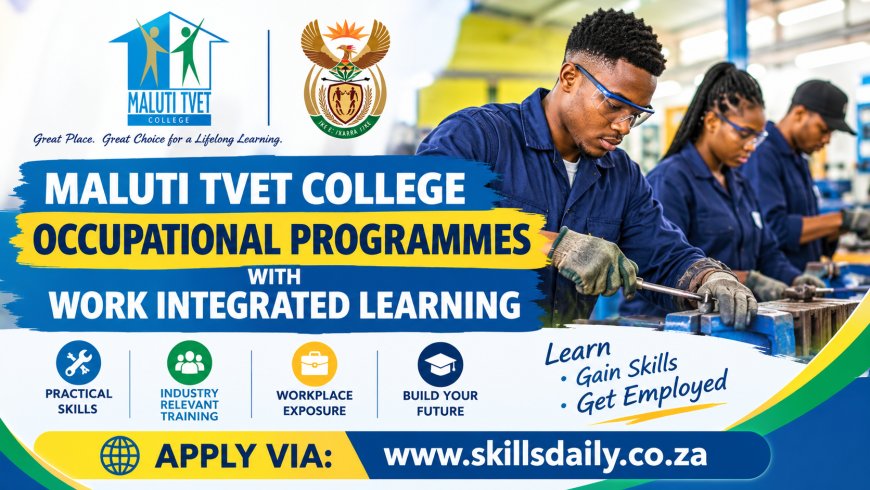
Maluti TVET College Occupational Programmes with Work Integrated Learning
Maluti TVET College offers a range of technical, vocational and occupational learning opportunities designed to help students develop practical skills that can be applied in the workplace. The College provides occupational programmes alongside its other vocational qualifications, with a focus on industry-relevant training and workplace exposure.
For students looking for an alternative to traditional university study, occupational programmes can provide a more practical route towards gaining occupational skills and preparing for employment, entrepreneurship or further learning.
What Are Occupational Programmes?
Occupational programmes are career-focused training programmes designed around specific occupations and workplace skills. Unlike programmes that are predominantly classroom-based, occupational training places significant emphasis on practical competence and the application of skills in real or simulated workplace environments.
Maluti TVET College describes its occupational offering as industry-specific training aimed at workplace readiness, including workplace learning, trade certification and employer partnerships.
Occupational qualifications in the South African TVET system are generally closely connected to workplace skills demands and include a workplace-based learning component.
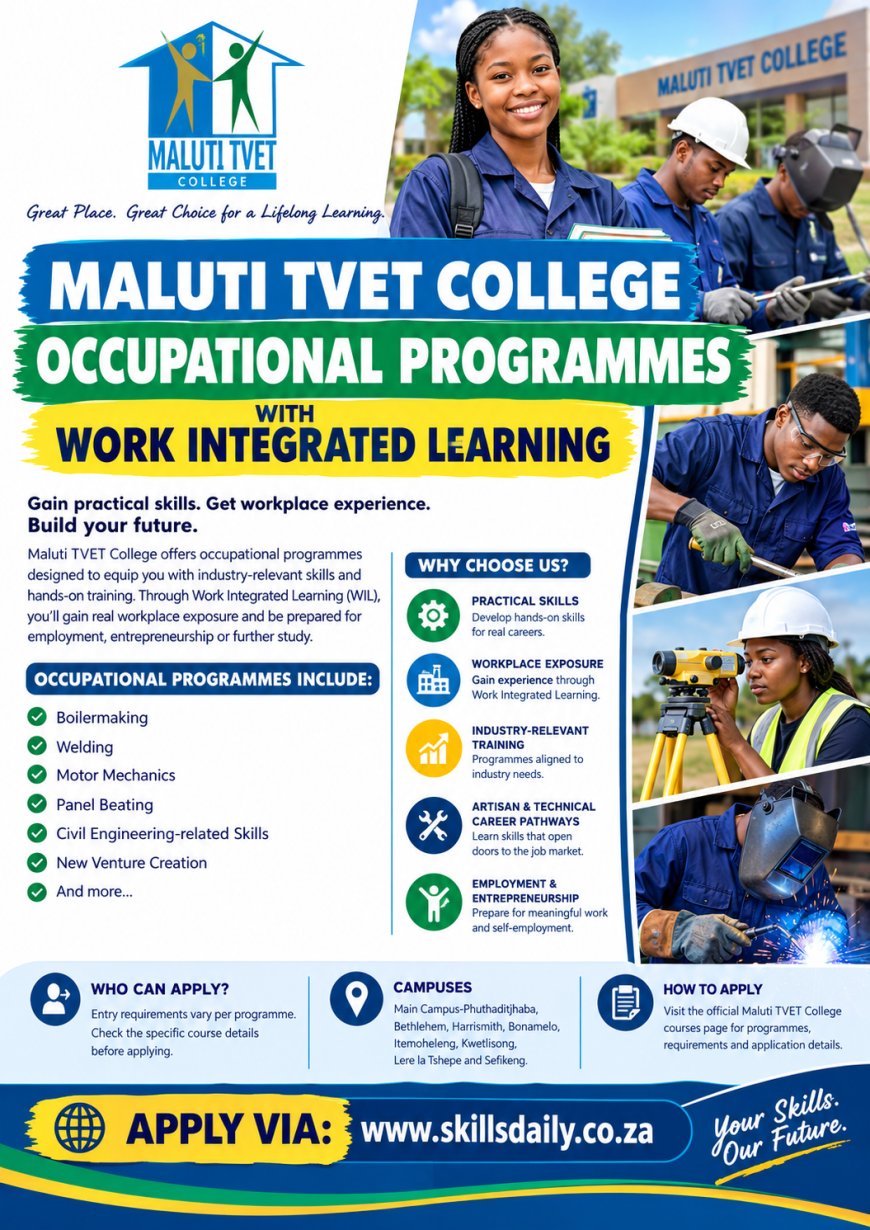
Maluti TVET College Occupational Programmes
Maluti TVET College's programme offering includes occupational and trade-related training in areas linked to technical and vocational careers. The College has historically provided occupational programmes through its skills-focused facilities, with its Skills Academy identified as a centre for occupational programmes.
Examples documented in the College's programme information include areas such as:
- Boilermaking
- Welding
- Motor Mechanics
- Panel Beating
- Civil Engineering-related skills
- New Venture Creation
- Other occupational and artisan-related programmes
The exact programmes, campuses, intake periods and entry requirements can change, so prospective students should check the College's current course information before applying.
Work Integrated Learning
One of the important features of occupational education is Work Integrated Learning (WIL) or workplace-based learning.
WIL gives students an opportunity to connect the knowledge and practical skills acquired during training with actual workplace requirements. Depending on the programme, this can involve workplace exposure, practical placement, industry experience or other forms of experiential learning.
Maluti TVET College's strategic documentation specifically identifies the placement of TVET students in workplaces or industry for work exposure and experiential learning as part of its objectives.
This workplace component is particularly important because occupational programmes are intended to produce learners who can demonstrate practical competence rather than relying solely on theoretical knowledge.
Why Choose an Occupational Programme?
Occupational training can be useful for students who want to develop practical skills for a particular career field.
Some potential benefits include:
1. Practical Skills
Students can develop hands-on skills relevant to particular occupations, particularly in technical and artisan-related fields.
2. Workplace Exposure
Work Integrated Learning provides an opportunity to gain exposure to workplace environments and understand how occupational skills are applied in practice.
3. Industry-Relevant Training
Maluti TVET College states that its programmes are designed to respond to industry needs and prepare students for employment and entrepreneurial opportunities.
4. Artisan and Technical Career Pathways
Occupational and trade-related programmes can provide pathways into technical careers where practical competence is an important requirement.
5. Employment and Entrepreneurship
The College's stated mission includes preparing students for meaningful employment and entrepreneurial success.
Who Can Apply?
Entry requirements depend on the specific occupational programme. Applicants should therefore check the requirements for the particular course they want to study before submitting an application.
Factors that may differ between programmes include:
- Minimum educational requirements
- Previous qualifications
- Age requirements
- Relevant work experience
- Programme-specific requirements
- Availability of places
- Campus offering the programme
- Workplace placement requirements
Students should not assume that the entry requirements for one occupational programme automatically apply to another.
Maluti TVET College Campuses
Maluti TVET College operates campuses in the Free State and surrounding areas. Its current website lists campuses including Main Campus-Phuthaditjhaba, Bethlehem Campus, Harrismith Campus, Bonamelo Campus, Itemoheleng Campus, Kwetlisong Campus, Lere la Tshepe Campus and Sefikeng Campus.
The availability of a particular occupational programme may differ by campus, so applicants should confirm where their chosen course is offered.
How to Apply for Maluti TVET College Occupational Programmes
Students interested in occupational programmes should visit the official Maluti TVET College courses page to view the current programme information, requirements and application instructions.
Official Courses Page: Maluti TVET College Courses
Before applying, prospective students should confirm:
- The occupational programme they want to study
- Admission requirements
- Campus location
- Duration of the programme
- Whether workplace learning is included
- Availability of workplace placement
- Application dates
- Funding options and applicable requirements
Maluti TVET College's occupational programmes provide students with opportunities to develop practical, occupation-specific skills while connecting their training with workplace requirements. The inclusion of workplace learning and industry exposure is particularly relevant for students who want a practical pathway into technical, artisan and other occupational careers.
With occupational programmes forming part of Maluti TVET College's broader vocational offering, prospective students can explore the available courses and select a programme that corresponds with their career interests, entry qualifications and preferred occupation.
Apply / Find out more: www.malutitvet.co.za/courses
What's Your Reaction?
 Like
0
 Dislike
0
 Love
0
 Funny
0
 Angry
0
 Sad
0
 Wow
0