




















Open University Free Online Courses: Study Online for Free with OpenLearn
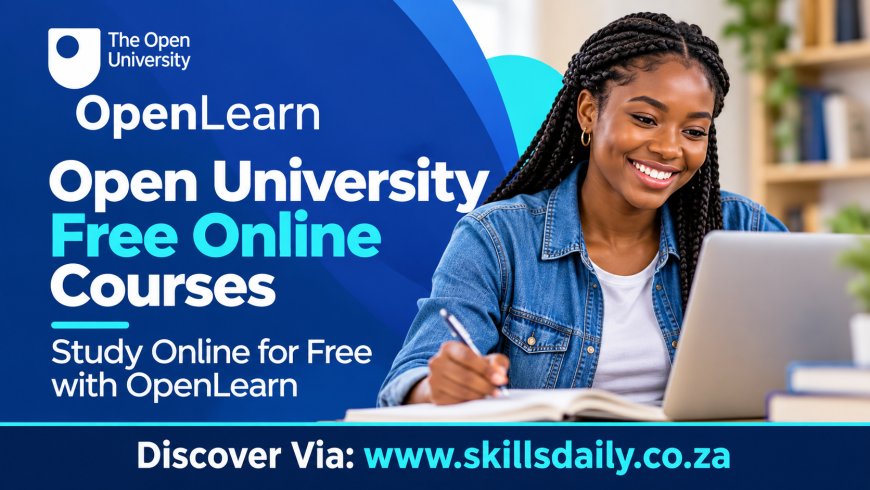
Open University Free Online Courses: Study Online for Free with OpenLearn
Are you looking for free online courses to improve your knowledge, develop new skills and advance your career? The Open University (OU) offers hundreds of free online courses through its OpenLearn platform. These courses provide learners worldwide, including South Africans, with opportunities to access educational resources without paying tuition fees.
Through OpenLearn, students, job seekers, working professionals and anyone interested in learning can access courses covering business, education, technology, health, languages, science and many other subjects.
The courses are self-paced, allowing learners to study from home and fit their learning around their personal and professional commitments. Some courses also provide free digital badges and certificates of participation upon successful completion.
Interested learners can explore the full catalogue of free courses and choose a subject that matches their interests and career goals.
Official course catalogue: https://www.open.edu/openlearn/free-courses/full-catalogue
About the Open University Free Online Courses
The Open University is a UK-based institution known for its distance-learning programmes. Through OpenLearn, it makes a wide range of educational materials and free online courses available to the public.
OpenLearn provides more than 900 free courses covering different subjects and levels of study. The courses are designed to help people gain knowledge, explore new interests and develop skills that can be useful in further education and employment.
Unlike traditional university programmes, OpenLearn's free courses do not require learners to attend physical classes. Most courses can be accessed online, and learners can study at their own pace.
The platform is open to international learners, making it accessible to people in South Africa and other countries.
List of Subjects Available on OpenLearn
The Open University offers free online courses across several subject areas. Learners can browse the catalogue and select courses according to their interests and learning objectives.
Some of the main subject areas include:
1. Business and Management Courses
Learners interested in business, entrepreneurship and management can explore courses designed to develop their understanding of the business environment.
Topics include:
-
Business communication
-
Entrepreneurship
-
Leadership and management
-
Marketing
-
Business planning
-
Financial management
These courses may be useful for aspiring entrepreneurs, business owners, graduates and individuals interested in developing business-related skills.
2. Education and Development Courses
OpenLearn provides educational courses for people interested in teaching, learning and personal development.
Possible areas of study include:
-
Teaching and education
-
Learning and development
-
Academic skills
-
Child development
-
Professional development
-
Study skills
These courses can help learners strengthen their understanding of education and develop skills that may be useful in academic or professional environments.
3. Health, Sports and Psychology Courses
Learners interested in health, psychology, sports and human behaviour can explore a variety of free courses.
Topics include:
-
Psychology
-
Mental well-being
-
Health and social care
-
Sports and fitness
-
Human behaviour
-
Personal well-being
These courses provide opportunities to explore health-related subjects and gain additional knowledge.
4. Science, Mathematics and Technology Courses
The Open University also provides free courses in science, mathematics and technology.
Some of the topics learners can explore include:
-
Mathematics
-
Environmental science
-
Artificial intelligence
-
Scientific research
-
Technology
-
Computing
These courses can be useful for learners who want to develop their scientific knowledge or explore technology-related subjects.
5. Digital and Computing Courses
Digital skills are increasingly important in education and the workplace. OpenLearn offers courses that introduce learners to computing and other technology-related topics.
Examples include:
-
Introduction to cybersecurity
-
Artificial intelligence
-
Digital technology
-
Computer-related subjects
-
Online safety
For individuals interested in technology, these courses provide an opportunity to explore relevant subjects and develop foundational knowledge.
6. Languages Courses
Learners who want to develop their language skills can explore courses in different languages.
Available learning opportunities include:
-
Introduction to Spanish
-
English language skills
-
Language learning and teaching
-
Language in professional life
These courses can help learners improve their communication skills and explore new languages.
7. History and the Arts Courses
OpenLearn also offers courses for people interested in history, literature, creative writing and the arts.
Some areas include:
-
Creative writing
-
History
-
Literature
-
Art and culture
-
Fiction writing
For example, the free course Start Writing Fiction introduces learners to character development, settings and different fiction genres.
8. Nature and Environment Courses
Learners interested in environmental issues can access courses covering sustainability, climate change and the natural world.
Topics include:
-
Climate change
-
Environmental sustainability
-
Carbon footprints
-
Nature conservation
-
Environmental science
These courses can help learners understand environmental challenges and explore ways to contribute to sustainability.
9. Society, Politics and Law Courses
OpenLearn also provides courses covering society, social sciences and legal topics.
Learners can explore subjects such as:
-
Social sciences
-
Society and culture
-
Law
-
International relations
-
Social development
These courses provide opportunities to understand social issues and develop critical thinking skills.
Examples of Free Open University Courses
The OpenLearn catalogue contains hundreds of courses. Some examples available on the platform include:
| Course name | Subject | Estimated duration |
|---|---|---|
| Introduction to Cyber Security: Stay Safe Online | Digital and Computing | 24 hours |
| Entrepreneurship – From Ideas to Reality | Business | 24 hours |
| Start Writing Fiction | History and the Arts | 12 hours |
| Introduction to Spanish | Languages | 4 hours |
| An Introduction to Artificial Intelligence | Education and Development | 6 hours |
| Business Communication: Writing a SWOT Analysis | Business | 8 hours |
| Environment: Treading Lightly on the Earth | Nature and Environment | 15 hours |
| You and Your World: Introducing the Social Sciences | Society and Politics | 5 hours |
Course availability and estimated study times may change. Learners should check the official catalogue for the latest information.
Who Can Apply for Open University Free Courses?
OpenLearn courses are available to learners from different backgrounds and educational levels.
The courses may be suitable for:
-
South African students looking to supplement their studies.
-
Unemployed young people interested in developing new skills.
-
Job seekers who want to strengthen their CVs.
-
Working professionals interested in continuous learning.
-
Entrepreneurs who want to improve their business knowledge.
-
Teachers and educators seeking additional learning resources.
-
Anyone interested in learning something new.
Most courses do not require formal academic qualifications. However, some intermediate and advanced courses may assume that learners already have knowledge of the subject.
Benefits of Studying Open University Free Online Courses
There are several benefits to enrolling in free courses offered through OpenLearn.
1. Free learning opportunities
All OpenLearn courses are free to study. Learners can access educational materials without paying course tuition fees.
2. Flexible online learning
Most courses are self-paced, allowing learners to study at a time that suits their schedules.
3. International accessibility
Learners from South Africa and other countries can access the platform online.
4. Wide selection of subjects
With hundreds of courses available, learners can explore subjects ranging from business and technology to education, health and the arts.
5. Certificates and digital badges
Learners who complete eligible courses can receive free Statements of Participation. Some courses also offer digital badges after learners meet the relevant completion requirements.
6. Improve your CV
Completing relevant courses can demonstrate initiative, continued learning and an interest in professional development. However, completing a free course does not guarantee employment.
7. Prepare for further studies
OpenLearn courses can help learners explore university-level subjects and develop confidence before pursuing formal education.
Do Open University Free Courses Offer Certificates?
Yes. OpenLearn provides free Statements of Participation for completed courses.
These statements can serve as evidence that a learner has completed a particular course. They can be downloaded and shared.
Some courses are also classified as Badged Open Courses. Learners who successfully complete the required activities and assessments for these courses can earn free digital badges.
It is important to understand that OpenLearn certificates and badges are generally not equivalent to accredited university qualifications. They are intended to recognise informal learning and course completion.
Learners should check the individual course page to find out whether a Statement of Participation or digital badge is available.
How to Enrol in Open University Free Online Courses
Interested learners can follow these steps to access the courses:
Step 1: Visit the official OpenLearn website
Go to the Open University free course catalogue:
https://www.open.edu/openlearn/free-courses/full-catalogue
Step 2: Browse the available courses
Explore the course catalogue and choose a subject that matches your interests or career goals.
Step 3: Select your preferred course
Click on a course to read its description, learning outcomes, estimated duration and any requirements.
Step 4: Create a free account
Create a free OpenLearn profile if required. Having an account allows you to save courses and track your learning progress.
Step 5: Start learning
Open your selected course and follow the available learning materials and activities.
Step 6: Complete the course
Work through the course content and complete any required activities or assessments.
Step 7: Download your certificate or claim your badge
If your chosen course offers a Statement of Participation or digital badge, follow the instructions provided on the course page to obtain it.
Are Open University Free Courses Accredited?
OpenLearn courses are free educational resources provided by The Open University. However, they are generally not formal, accredited qualifications.
Learners should distinguish between completing a free online course and obtaining a recognised university qualification.
Although OpenLearn certificates and digital badges can demonstrate learning and personal development, employers and educational institutions may have different requirements for recognising them.
Anyone seeking an accredited qualification should check the relevant institution's formal study programmes.
Why South African Learners Should Consider OpenLearn
South African students and job seekers can use OpenLearn to access additional educational resources without paying course tuition fees.
For unemployed young people, free online courses provide an opportunity to explore different career fields and develop knowledge while looking for employment.
Students can use the platform to supplement their existing studies, while working professionals can explore subjects that may support their professional development.
Entrepreneurs can also benefit from courses covering business planning, marketing and entrepreneurship.
Since the courses are available online, learners can study from home or wherever they have a suitable internet connection. However, learners should consider their data costs and access to a suitable device.
Important Things to Know Before Enrolling
Before starting an OpenLearn course, learners should consider the following:
-
All OpenLearn courses are free to study.
-
Courses cover different subjects and learning levels.
-
Most courses allow learners to study at their own pace.
-
Some courses take only a few hours, while others require more extensive study.
-
Certain courses offer free digital badges.
-
Statements of Participation are available for completed courses.
-
Most courses do not provide formal academic credits or accredited qualifications.
-
Course requirements and available learning resources may differ.
How to Access the Open University Free Course Catalogue
Learners interested in exploring the available courses can visit the official OpenLearn website.
Official website: https://www.open.edu/openlearn/free-courses/full-catalogue
The catalogue allows learners to filter courses by subject, level, language and estimated study duration. This makes it easier to identify courses that suit their interests and available study time.
Conclusion
The Open University free online courses available through OpenLearn provide an opportunity for learners worldwide to access educational resources and develop new skills without paying tuition fees.
With courses in business, education, technology, health, science, languages and many other subjects, learners can choose programmes that match their personal interests and professional development goals.
South African students, unemployed youth, job seekers and working professionals can use these courses to expand their knowledge, explore new career fields and demonstrate their commitment to lifelong learning.
Interested learners can visit the official OpenLearn course catalogue, select a suitable course and begin learning online for free.
APPLY ONLINE: https://www.open.edu/openlearn/free-courses/full-catalogue
What's Your Reaction?
 Like
0
 Dislike
0
 Love
0
 Funny
0
 Angry
0
 Sad
0
 Wow
0