





















MICT SETA Work Integrated Learning (WIL) Programmes: Build Industry-Ready Digital Skills Development
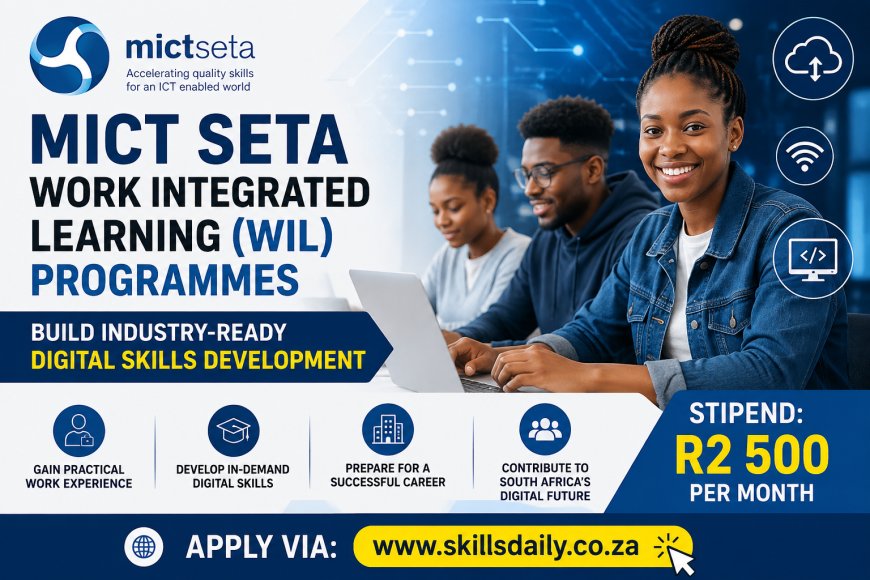
MICT SETA Work Integrated Learning (WIL) Programmes: Build Industry-Ready Digital Skills
The Media, Information and Communication Technologies Sector Education and Training Authority (MICT SETA) supports skills development opportunities aimed at strengthening South Africa's media, information and communication technology sectors. One of the learning interventions offered through MICT SETA is Work Integrated Learning (WIL), which gives students opportunities to connect their academic knowledge and skills with professional workplace environments.
According to MICT SETA, WIL programmes are designed as short critical programmes for development within the industry. They provide an educational strategy through which students can integrate disciplinary knowledge and skills with work by applying what they have learned in real and professional work contexts.


What Are MICT SETA WIL Programmes?
MICT SETA describes Work Integrated Learning as an approach that enables students to take the knowledge and skills gained through their studies and apply them within professional work environments. The programmes form part of the broader skills development interventions supported by the SETA.
The organisation works with industry partners, universities and TVET colleges to support education and training programmes. Its career opportunities guide explains that WIL helps students integrate disciplinary knowledge and apply their skills in authentic professional work settings.
This makes WIL particularly relevant to students who need practical exposure as part of their education and career preparation.
Vendor-Specific Programmes
One of the areas highlighted by MICT SETA under WIL is vendor-specific programmes.
These are described as short courses that are industry-centred and based on international examinations. They are designed to address technological developments associated with specific multinational companies or local business units that use those technologies in their operations.
This focus is important in the rapidly changing ICT environment, where technologies and digital platforms continue to evolve.
Vendor-specific training can help learners develop knowledge that is relevant to technologies used in actual business environments.
Why Are MICT SETA WIL Programmes Important?
The ICT sector requires people who can do more than understand theoretical concepts. Employers also need individuals who can apply technology and professional skills to practical situations.
WIL can help bridge this gap by giving students opportunities to:
- Apply knowledge learned through their studies.
- Develop practical workplace skills.
- Gain exposure to professional environments.
- Understand industry expectations.
- Strengthen their technical abilities.
- Develop workplace confidence.
- Improve their career readiness.
- Become familiar with technologies used in industry.
MICT SETA's approach specifically aims to connect disciplinary knowledge and skills with real professional work contexts.
WIL for University and TVET Students
MICT SETA supports WIL opportunities for students in both higher education and TVET education.
Its planning documents distinguish between university students and TVET students who require workplace learning to complete their qualifications. The purpose is to provide relevant practical workplace components that help students meet their qualification requirements.
The MICT SETA Career Opportunities Guide also notes that the organisation collaborates with public and private universities as well as TVET colleges to deliver educational programmes.
This makes MICT SETA a significant stakeholder for students looking for workplace exposure within the media, information and communication technology sectors.
MICT SETA WIL Funding Opportunities
MICT SETA uses its Discretionary Grant funding to support various skills development interventions.
For the 2025/26 Discretionary Grant window, MICT SETA listed targets of:
- 1,900 TVET students requiring WIL to complete their qualifications.
- 800 university students requiring WIL to complete their qualifications.
These targets apply across all provinces.
The numbers demonstrate the scale at which WIL is being incorporated into MICT SETA's skills development activities.
It is important to remember that these are programme targets and do not mean that every student is automatically guaranteed a placement. Availability depends on approved programmes, participating employers, eligibility and the relevant funding and placement processes.
What Happens During WIL?
The exact structure of a WIL programme can depend on the qualification, institution, employer and specific intervention.
In general, the objective is to allow students to gain practical experience related to their field of study. This may involve working with technologies, systems, processes or professional activities relevant to the MICT sector.
MICT SETA's own definition emphasises the application of knowledge and skills in real and professional work contexts.
Students participating in WIL should therefore approach the opportunity as a professional learning experience rather than simply a temporary job.
Areas Within the MICT Sector
MICT SETA's programmes support skills development within the media, information and communication technologies environment.
Potential areas of learning can include fields connected to:
- Information and communications technology.
- Digital technologies.
- Software and technology platforms.
- Media.
- Marketing and digital communications.
- Creative industries.
- Broadcasting.
- Information technology.
- Other MICT-related occupations and skills.
The specific qualification, technology or occupational area depends on the individual WIL or training programme.
Practical Experience Can Improve Employability
One of the biggest advantages of WIL is the opportunity to develop experience before entering the full-time labour market.
Students can leave a structured workplace learning programme with a better understanding of:
- Professional communication.
- Workplace expectations.
- Teamwork.
- Meeting deadlines.
- Technical responsibilities.
- Problem-solving.
- Professional conduct.
- Applying theoretical knowledge.
MICT SETA has reported examples where WIL participants were able to develop specialised skills through structured workplace programmes. One documented example involved 13 TVET students who joined Bastion & Flowe in 2020 through a MICT SETA-funded WIL programme. The programme included learners from Financial Management, Marketing Management, Art & Design and Management Assistant backgrounds, with training that included digital marketing certifications and practical workplace responsibilities.
MICT SETA WIL Programme Results
MICT SETA's 2024/25 Annual Report provides an indication of the number of students supported through its WIL interventions.
During the 2024/25 financial year, 1,214 university students requiring WIL to complete their qualifications were placed in workplaces, compared with a target of 700. The report also records 701 university students who completed their WIL placements, against a target of 350.
The SETA attributed the higher-than-target placement performance partly to stakeholder roadshows, internal induction processes and ongoing monitoring. For completed placements, it highlighted induction, attendance monitoring, logbook verification and timely stipend payments as factors supporting successful completion.
Are MICT SETA WIL Programmes Paid?
Students should not assume that every MICT SETA WIL opportunity carries the same stipend or conditions.
MICT SETA's programme documentation refers to employer-learner agreements and funding arrangements, while individual opportunities may have their own conditions. Where a particular WIL opportunity provides a stipend, the amount and payment conditions should be confirmed in that specific programme advertisement or agreement.
Applicants should therefore carefully read the official opportunity before accepting a placement.
Who Can Apply?
Eligibility depends on the specific WIL intervention.
Potential participants may include students from:
- Universities.
- Universities of technology.
- TVET colleges.
- Other recognised higher education or training institutions.
Students should check whether their qualification requires workplace learning and whether the specific programme is aligned with their field of study.
MICT SETA's planning documents specifically refer to unemployed higher education and TVET learners requiring the practical workplace component of their qualifications.
How to Prepare for a WIL Opportunity
Students interested in MICT SETA-supported WIL opportunities should prepare before applications open.
1. Update Your CV
Your CV should include your:
- Full name and contact details.
- Qualification.
- Institution.
- Current year of study.
- Relevant subjects.
- Technical skills.
- Computer skills.
- Previous work or volunteer experience.
- Availability for workplace training.
2. Confirm Your WIL Requirement
Speak to your institution's WIL coordinator or relevant academic department to confirm exactly what workplace experience you need.
This is particularly important for students who require WIL to complete their qualifications.
3. Look for Relevant Opportunities
Look for opportunities that match your qualification and career interests. MICT SETA's WIL programmes are linked to the broader MICT sector, so students should consider opportunities that provide meaningful exposure to their field.
4. Prepare Supporting Documents
Depending on the opportunity, applicants may be required to provide documents such as:
- South African identity document.
- Updated CV.
- Proof of registration.
- Academic record.
- Qualification information.
- Proof of residence.
- Other documents specified by the programme.
Always follow the requirements of the specific advertisement.
MICT SETA WIL Programmes at a Glance
| Feature | Details |
|---|---|
| Organisation | MICT SETA |
| Programme | Work Integrated Learning (WIL) |
| Sector | Media, Information and Communication Technologies |
| Purpose | Connect academic knowledge and skills with professional work |
| Target Groups | University and TVET students, depending on programme |
| Training | Practical and industry-related learning |
| Programme Type | Includes short critical and vendor-specific programmes |
| Vendor Training | Industry-centred short courses based on international examinations |
| Workplace Exposure | Provided through relevant WIL interventions and participating organisations |
| Funding | May be supported through MICT SETA Discretionary Grants |
| Coverage | Opportunities can be implemented across South Africa |
Where to Find MICT SETA WIL Information
Students and stakeholders can visit the official MICT SETA Work Integrated Learning page for information about WIL.
Students should also monitor MICT SETA announcements and relevant university or TVET college communication because WIL opportunities can be administered through partnerships involving institutions, employers and the SETA.
MICT SETA Work Integrated Learning programmes are designed to help students bridge the gap between education and professional practice. By connecting academic knowledge with real workplace environments, WIL can help students develop practical skills and improve their readiness for careers in the media, information and communication technology sectors.
The availability of WIL opportunities is particularly significant for students who need practical workplace experience to complete their qualifications. MICT SETA's recent performance figures also demonstrate substantial participation in university WIL placements, with more than 1,200 university students placed during the 2024/25 financial year.
Important: WIL opportunities, eligibility requirements, placement numbers, stipends and application procedures can change. Applicants should always verify the latest information through MICT SETA, their institution and the specific programme advertisement before applying.
Official source: MICT SETA – Work Integrated Learning
What's Your Reaction?
 Like
0
 Dislike
0
 Love
0
 Funny
0
 Angry
0
 Sad
0
 Wow
0