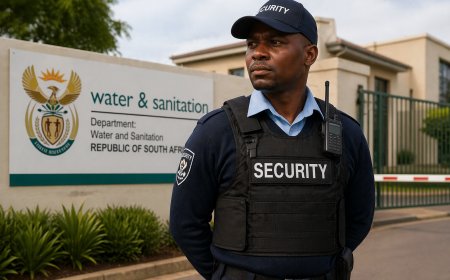











General Workers - Department of Agriculture and Rural Development
Unsung Pillars of Public Service: General Workers at the Department of Agriculture and Rural Development
FOLLOW WHATSAPP CHANNEL FOR RECENT UPDATES
In the landscape of public sector work, much attention is often given to policymakers, agricultural scientists, or programme managers. Yet, the daily operations that make rural development and agricultural support possible rely heavily on a cadre of workers whose contributions are essential — general workers. Within the various arms of South Africa’s agriculture and rural development departments, these employees carry out routine but vital functions that ensure service delivery, safety, and the smooth functioning of facilities across the country.
Who Are General Workers?
General workers in the Department of Agriculture and Rural Development are employed within various provincial offices and service points — from research stations and animal health facilities to rural offices and fencing posts — performing a range of physical and administrative support tasks. These roles are entry-level, often requiring basic education such as Grade 10, but do not typically demand formal tertiary qualifications.
Their job titles may include general worker, cleaner, gate attendant or field support assistant depending on the specific site and the nature of the duties. Salary levels for these roles are often at the lower end of the public service scale, reflecting both the entry-level nature of the work and its importance in keeping operations functional.
Daily Responsibilities and Duties
The work of a general worker varies by location and departmental priority but commonly includes the following:
-
Routine manual labour and maintenance: General workers often engage in physical tasks such as cleaning facilities, assisting with basic farm activities, maintaining grounds and infrastructure, and ensuring that office and field spaces are safe and functional.
-
Security and monitoring: At some sites, especially where livestock or controlled agricultural materials are present, general workers help monitor access and movement. For example, in parts of Limpopo province, general workers assist with patrolling red-line fences — boundaries used for controlling foot-and-mouth disease — and check the movement of vehicles entering or leaving controlled areas. They may record and report vehicle movements, check permits, and help ensure compliance with regulations designed to protect animal health.
-
Record keeping and support: Though these roles are often physical in nature, general workers are also expected to keep basic records, report irregularities, and assist supervisors with administrative checks related to their duties. Good communication and basic literacy skills are therefore valuable even at this level.
-
Basic operational support: Tasks like operating simple gardening tools, clearing bushes along fence lines, or cleaning vehicles and equipment help ensure that more specialised staff — such as agricultural technicians — can perform their work without interruption.
In essence, general workers perform the groundwork that enables complex programmes — from animal health surveillance to agricultural research — to function effectively across rural South Africa.
Why Their Role Matters
Although general workers are often the least-visible staff in government operations, their contribution is foundational:
-
Ensuring safety and compliance: In contexts like animal health control, their monitoring work helps enforce biosecurity measures that protect livestock and maintain South Africa’s access to export markets.
-
Supporting service continuity: Clean, secure, and well-maintained facilities enable veterinarians, extension officers and administrative staff to do their work more efficiently.
-
Providing rural employment opportunities: These roles offer entry-level employment in rural areas, providing valuable income and opportunities for people with limited formal qualifications.
-
Facilitating community trust: Through consistent day-to-day presence and interaction, general workers often become the department’s face in local communities, helping rural residents engage with government services.
Challenges and Opportunities
Like many public sector roles, general worker positions face challenges:
-
Low pay and limited career progression: As entry-level positions, they provide limited upward mobility unless paired with broader training and development opportunities.
-
Demanding physical work: The tasks can be physically strenuous, especially in outdoor environments and under difficult weather conditions.
However, there are also opportunities:
-
Skill development: With structured workplace training, general workers can develop transferable skills — in communication, reporting, security checks and basic operations — that can support future career growth.
-
Linkages to broader programmes: Departments can harness this workforce as part of expanded community outreach or monitoring efforts during agricultural campaigns and emergency responses.
Department of Agriculture, Land Reform and Rural Development — a deep dive
Quick preview: this is a focused, evidence-based deep dive into the department’s mandate, recent institutional changes, core programmes, performance challenges (including animal disease and budget issues), and practical recommendations for strengthening agriculture and rural resilience in South Africa. I draw on official plans, government yearbooks, recent reporting and international analysis to ground the piece.
1) What the department is for — mandate and scope
The department is responsible for regulating agricultural production, supporting farmer development, managing land reform and restitution, and promoting rural development that reduces poverty and increases food security. Its remit combines technical agricultural policy (inputs, extension, veterinary services, market access) with socio-economic interventions (land redistribution/restitution, rural livelihoods, targeted grants). This combined mandate makes it a uniquely multidisciplinary actor at the intersection of food systems, land justice and rural development.
2) A short institutional history (why its shape matters)
The current institutional form emerged from mergers and later reconfigurations. In 2019 agricultural functions from the former Department of Agriculture, Forestry and Fisheries were merged with the Department of Rural Development and Land Reform, creating a department with both agriculture and land-reform responsibilities. That configuration has since been revisited: recent government re-organisations split agriculture from the combined land-reform portfolio, producing separate ministerial and departmental arrangements in 2025, which has implications for budget lines, capacity and programme delivery. The reconfiguration is important because policy coherence (e.g., linking land transfers to productive support) depends on how responsibilities, budgets and staff are divided.
3) Core programmes and instruments
Several flagship programmes define how the department works with farmers and rural households:
-
Ilima/Letsema & Comprehensive Agricultural Support Programme (CASP): these conditional grants and support programmes target household food production, smallholder development and established farm support, offering inputs, mentorship and small capital grants. They’re central to the department’s short-term food security and livelihoods interventions.
-
Land restitution and redistribution mechanisms: land claims processing, restitution administration and linked support to make transferred land productive. These are politically sensitive, administratively complex and require strong coordination with provinces and local government.
-
Veterinary and biosecurity services: disease surveillance, emergency response, approvals for exports and import controls—core to protecting trade and rural incomes.
-
Farmer support & development: extension services, financing facilitation, input provision, and measures aimed at youth and women in agriculture.
These programmes are implemented in partnership with provincial departments, municipalities, state agencies and NGOs; delivery therefore depends on intergovernmental capacity and grant administration.
4) Funding and recent fiscal trends
Agriculture and rural development are jointly a significant spending area for both national and provincial governments. Recent budget framing from Treasury has shown consolidated sector spending in the tens of billions (the agriculture and rural development spending function was allocated roughly R39.5 billion in the recent budget cycle reported). Budget changes and the departmental split have a direct effect on which programmes get ring-fenced and how conditional grants are structured. Under- or mis-timed transfers to provinces and slow expenditure (underspending) on restitution and related programmes have been flagged by parliamentary oversight as a material problem.
5) Acute risks and performance problems right now
A handful of issues are driving underperformance and crisis risk across the sector:
-
Animal disease outbreaks and biosecurity shocks: outbreaks like the recent foot-and-mouth disease (FMD) flare up rapidly, force culling, disrupt exports and require urgent vaccination, testing and sometimes emergency funding. These events expose weaknesses in rapid response logistics and vaccine capacity. (Recent news coverage shows large numbers of cattle affected and trade bans imposed by importing countries.)
-
Climate and environmental pressures: increasingly severe droughts, heat stress and degraded soils reduce smallholder and commercial yields. South Africa’s agricultural policy discussions increasingly revolve around climate resilience (irrigation, drought-tolerant seed, soil health) and balancing productivity with sustainability.
-
Administrative bottlenecks & underspending: processing land claims, paying out grants and implementing restitution have seen delays and underspending that diminish programme effectiveness and trust. Parliamentary oversight has documented declines in spending performance in some sub-programmes.
-
Fragmentation from re-organisation: the 2025 separation of agriculture and land reform into different departmental structures can improve focus but introduces transition risks: duplicated roles, unclear accountability and short-term gaps in operational funding or staff skills. Effective transition planning is crucial.
6) Opportunities and what’s working
Despite the challenges, there are clear levers that can accelerate impact:
-
Targeted smallholder support packages (combining inputs, training, market links and post-harvest handling) can rapidly improve yields and incomes if delivered reliably and aligned with local agro-ecologies. Ilima/Letsema shows how household-level support can be scaled when grant flows are predictable.
-
Public-private partnerships to boost vaccine production, cold chains, mechanisation and digital extension can reduce reliance on external suppliers and speed responses to animal health crises. Recent moves to fund local FMD vaccine capacity illustrate this path.
-
Data and monitoring upgrades: investments in soil mapping, market information systems and claims-tracking can cut delays and improve decision-making.
7) Practical recommendations (policy + operational)
If policymakers and practitioners want measurable improvements in the next 3–5 years, the following actions are high-leverage:
-
Ring-fence and streamline conditional grants for Ilima/Letsema/CASP with clearer provincial accountability and quarterly performance triggers — reduce administrative friction that causes underspending.
-
Create a transition taskforce to manage the departmental split (HR, budgets, IT systems, grant agreements) to avoid service gaps where agriculture support meets land reform obligations.
-
Invest in domestic vaccine production & distribution logistics (public co-investment, fast-track approvals) to limit the economic damage of large outbreaks like FMD.
-
Scale climate-smart extension: combine drought-resilient seeds, water-harvesting, and farmer-to-farmer demonstration plots; prioritise regions identified as climate hotspots.
-
Strengthen claims administration with a digital claims platform and backlog-reduction teams to accelerate restitution while pairing transfers with technical support for productive use.
8) What to watch next (indicators for success)
Short-term: timely disbursement rates for conditional grants, reductions in land-claim backlogs, and response time to animal disease outbreaks. Medium term: increases in smallholder yields, stabilised export access after disease control, and demonstrable jobs created in rural areas. Fiscal discipline and clear programmatic indicators in annual performance plans will be the key signals to monitor.
9) Short reading list / sources (selected)
-
South Africa Yearbook — Agriculture, Land Reform and Rural Development (official compilation).
-
DALRRD Strategic Plan 2020–2025 (official strategic plan).
-
OECD country chapter on Agricultural Policy Monitoring (context on restructuring and grants).
-
Recent reporting on the foot-and-mouth outbreak and vaccine response.
-
Parliamentary and budget oversight items noting underspending and performance issues.
GENERAL WORKER (3 POSTS)
(Re-advertisement: Applicants who previously applied are encouraged to re-apply if they remain interested.)
Salary: R138 486 per annum (Level 02)
Centres:
-
Vhembe East – Ref No: LDARD 18/2/2026 (1 Post)
-
Vhembe Central – Ref No: LDARD 19/2/2026 (1 Post)
-
Mopani District – Ref No: LDARD 20/2/2026 (1 Post)
Minimum Requirements:
-
ABET Level 2 or an equivalent qualification recognised by SAQA.
-
Relevant field experience will be advantageous.
Knowledge, Competencies and Skills:
-
Basic literacy and numeracy skills (ability to read and write).
-
Understanding of cleaning methods and gardening practices.
-
Ability to operate and maintain basic gardening tools and equipment.
-
Good interpersonal and communication skills.
-
Ability to work effectively in a team environment.
-
Physically fit and capable of performing manual labour.
-
Demonstrate reliability, punctuality, productivity, commitment, and loyalty.
-
Maintain professional and respectful behaviour towards colleagues and clients.
Key Responsibilities:
-
Provide general assistance and support services.
-
Maintain cleanliness and upkeep of premises and surrounding areas.
-
Safeguard and maintain gardening tools and equipment.
-
Move furniture and equipment when required.
-
Dispose of waste, including garbage and empty cartons.
-
Assist with receiving stock and supplies.
-
Report any losses or damage to equipment.
-
Load and offload goods as needed.
Enquiries:
Vhembe District:
-
Mammburu TD – Tel: (015) 963 2005
-
Rathogwa MM – Tel: (015) 963 2007
Mopani District:
-
Ms. Malatji MA / Matlou MT – Tel: (015) 811 9837 / (015) 811 1189
Closing snapshot
The department sits at a crossroads: it must square urgent crisis responses (animal disease, climate shocks) with long-term structural reforms (land restitution, rural transformation). Success will depend on stable budgets, nimble emergency capacity, and better integration of land transfers with concrete production support. With the right combination of strengthened veterinary capacity, predictable grant flows, and targeted climate-smart farmer support, the department can meaningfully reduce rural poverty and strengthen national food security — but the coming years will test whether institutional changes translate into improved outcomes on the ground.
CLICK HERE TO DOWNLOAD ORIGINAL POST
What's Your Reaction?
 Like
4
Like
4
 Dislike
1
Dislike
1
 Love
0
Love
0
 Funny
0
Funny
0
 Angry
0
Angry
0
 Sad
0
Sad
0
 Wow
0
Wow
0